Revenue & Performance
What's the average close rate for a plumber?
The median plumbing tech sells 73.6% of the calls he runs. Techs in the bottom 25% close 66.3% or less. Techs in the top 25% close 81.9% or more. Your trip charge, your mix of demand and estimate calls, and how many members you serve all move this number.
Close rate is one math problem
Take the number of calls a tech sold. Divide it by the number of calls he ran. That is his close rate. It is the same way we count average ticket, so the two numbers line up.
A lot of plumbing content mixes this up with booking rate, which is how many phone calls turn into appointments. That is a front desk number. Close rate starts when the tech arrives at the house.
The real numbers
These numbers come from plumbing techs at shops we coach, tracked over the past 12 months. Each tech's close rate is counted across the whole year, then ranked against other techs.
- Bottom 25% of techs: 66.3% or less
- Middle tech (median): 73.6%
- Top 25% of techs: 81.9% or more
Compare each tech to these numbers, not just your shop total. A tech near the median is in line with other coached techs. That is a fine place to be, but it is not the ceiling. In our coaching, the techs near the top usually see their own close rate every week, not just at review time.
Three things that change what you should expect
Before you compare your techs to these numbers, check these three things first. They can explain a lot of the gap on their own.
A trip charge changes who calls you
If you charge a trip fee, you filter out price shoppers before a tech ever quotes the job. Some shops call this a diagnostic fee or a dispatch fee. It works the same way. Fewer price shoppers means a higher close rate and a higher average ticket. That is normal, not a sign your techs got better overnight.
If you do not charge a trip fee, expect more calls from people comparing prices. That pulls your close rate toward the lower end. It does not mean your techs are weak. It means more of your calls come from people who were never likely to buy.
Demand calls close easier than estimate calls
A demand call is a customer with water on the floor, a clogged main, or no hot water today. An estimate call is someone pricing a water heater replacement or a repipe before they decide.
Demand calls close at a higher rate because the customer already decided they need the work done now. Estimate calls close lower because the customer is still shopping. If your techs run a lot of estimate calls, do not expect them to sit at the top of this range.
Members close higher than first-time customers
A member already trusts your shop and already pays you each year. When a tech finds a problem on a member's home, the customer is not shopping around. A shop with a large membership base should expect a higher close rate than a shop running mostly first-time calls.
Price options change the close rate
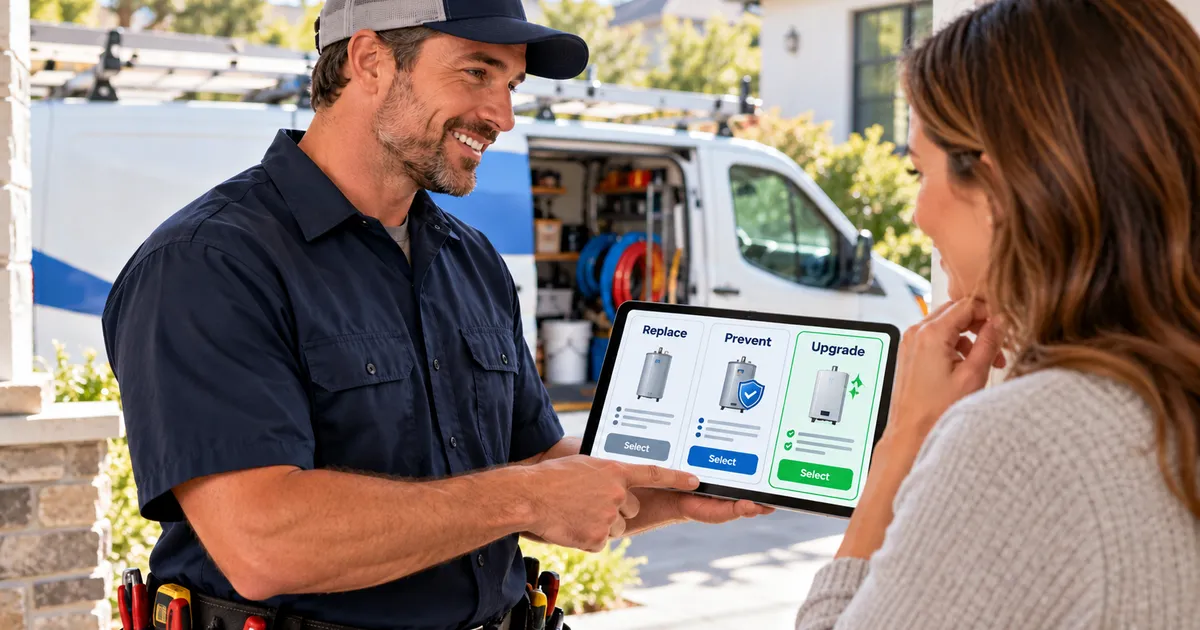
A tech who gives one price gets a yes or a no. A tech who shows three options gives the customer a way to say yes at a price that fits. The options might be a repair, a better repair, and a replacement. Shops that move from one price to good, better, and best options usually see close rate go up. A flat-rate price book makes this easier because every tech shows the same options at the same prices.
A high close rate is not always good
Close rate and average ticket move together. A tech who closes almost every call may be pricing too low or only offering the cheapest fix. Check close rate next to average ticket. A tech with a high close rate and a low average ticket is selling less than the customer would have bought.
What we recommend
Pull your close rate by tech, not just by shop. A shop average can hide one tech closing almost everything and another closing almost nothing.
Split your numbers by call type before you judge a tech. A tech running mostly estimate calls should not be scored the same as one running mostly demand calls. Compare techs against others running the same type of work.
Check your trip charge policy once a year. If your close rate sits low and you have no trip fee, that policy change alone may explain more of the gap than any training problem.
Run a ride-along with any tech closing under the shop average on demand calls. That is where a true presentation problem shows up fastest.
Next steps this week
- Pull close rate and average ticket by tech from your KTI report, not just the shop total.
- Sort last month's calls into demand and estimate, and check close rate for each group separately.
- Confirm whether your shop charges a trip fee, and if not, bring that question to your next coaching session.
66.3%
Plumbing close rate (bottom 25%)
Team SPG coached-shop data · trailing 12 months ending Sep 2026 · updated Sep 2026
73.6%
Plumbing close rate (median)
Team SPG coached-shop data · trailing 12 months ending Sep 2026 · updated Sep 2026
81.9%
Plumbing close rate (top 25%)
Team SPG coached-shop data · trailing 12 months ending Sep 2026 · updated Sep 2026

Related questions
What is a good close rate for a plumbing company?
The median plumbing tech closes 73.6% of his calls. Techs in the top 25% close 81.9% or more. Aim for the top 25%, but check average ticket at the same time so you know the close rate is not coming from low prices.
How do I raise my techs' close rate without cutting prices?
Coach the presentation, not the price. Ride along with your lowest closers, watch how they walk the customer through options, and fix the specific step where they lose the sale.
Is a 90% close rate good?
Not always. A close rate that high often means the tech is pricing low or only offering the cheapest option. Look at his average ticket. If it is below your shop average, coach price options before you celebrate the close rate.
What is the difference between close rate and booking rate?
Booking rate is how many phone calls your front desk turns into appointments. Close rate is how many of those appointments a tech turns into a sale. They are separate numbers with separate owners.